Five Ways to Wear One Bottle Through a Whole Autumn Day
Quick Answer: Cool air slows evaporation, so a fragrance projects less and lasts longer in autumn than in summer. That means you need warmth to lift it - which comes from placement on the body rather than from more sprays. Where you apply changes the result far more than how much you apply. Five placements, five different experiences from the same bottle. Autumn rewards technique over quantity.
Most people respond to a quiet fragrance by adding sprays.
Moving them is almost always the better answer.
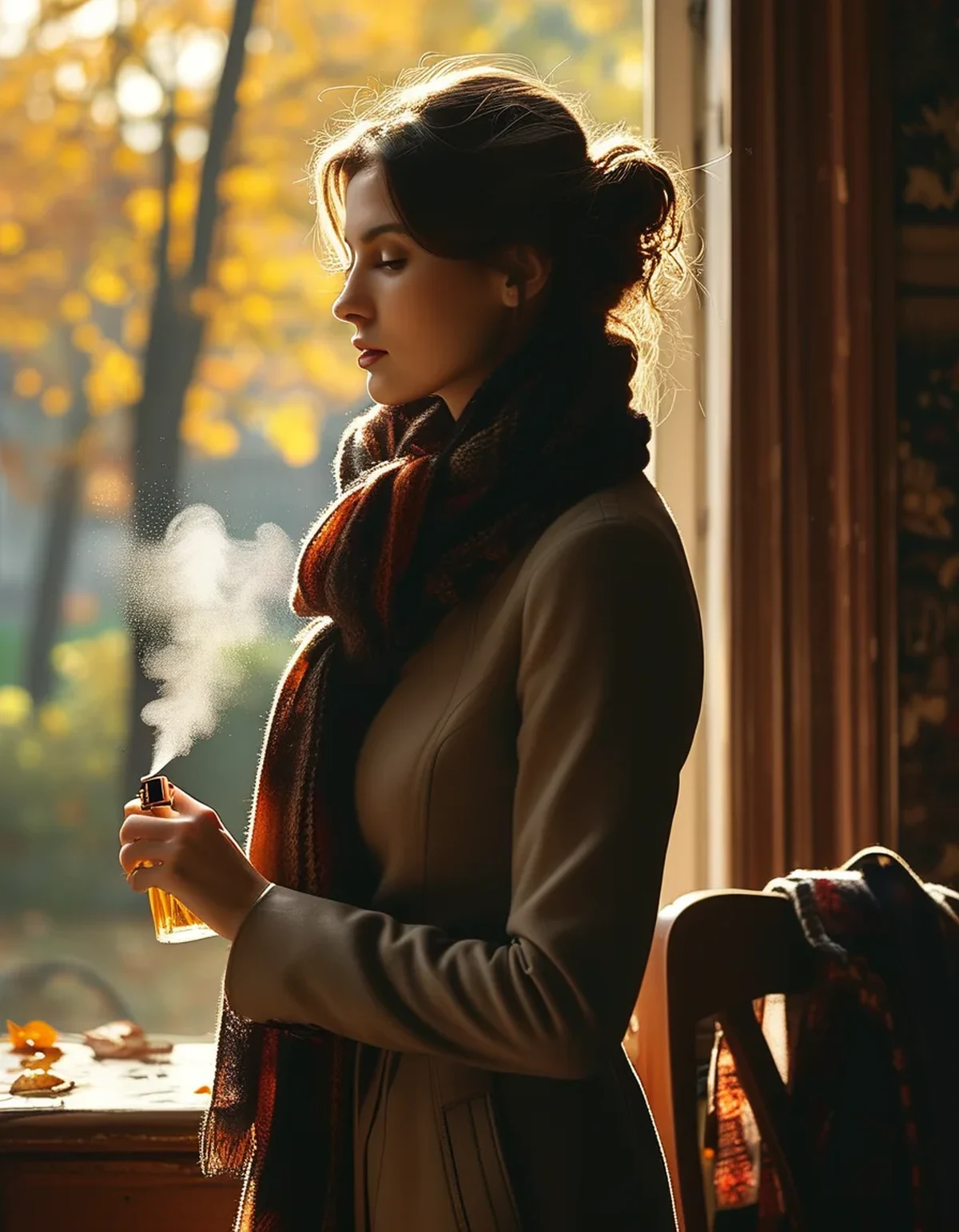
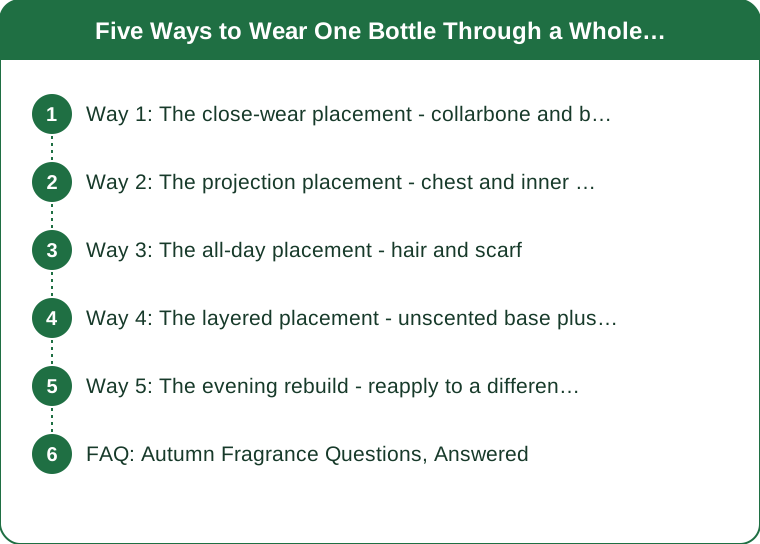
Way 1: The close-wear placement - collarbone and behind the ear
The classic warm pulse points, and the right choice when you want the fragrance to stay in your own space.
Skin temperature drives evaporation, and evaporation is what lifts scent molecules into the air. The collarbone hollow and the area behind the ear are consistently warmer than the surrounding skin, so they release fragrance steadily throughout the day rather than in a burst.
This placement produces a scent radius of roughly an arm’s length - noticeable to someone standing close, invisible across a room. In autumn, when everyone is indoors more and in closer quarters, this restraint is the point.
Two sprays is plenty here. The warmth does the work; more product just saturates the top notes.
It suits offices, dinners, and any environment where you will be sitting near people for hours. The scarf and collar of an autumn coat trap the scent in this zone and release it gently as you move - one of the small pleasures of the season.
Best for: warm and woody fragrances, ambers, and anything with vanilla or musk in the base. Cool air softens these beautifully.
Way 2: The projection placement - chest and inner elbows
Larger, warmer surface area, more movement, more diffusion.
The chest is a big radiating surface and it sits directly beneath your face, so the scent rises toward you and everyone facing you all day. The inner elbows are warm and move constantly, which pushes scent into the air with every gesture.
This is the placement for when you want to be noticed. Two sprays on the chest and one on each inner elbow produces a distinctly larger presence than the same four sprays behind the ears.
Autumn layering interacts with this. A jumper over a chest application creates a warm chamber that releases scent every time you move, and the effect builds through the day rather than fading.
Be conscious of enclosed spaces. Cold weather means closed windows, heated offices, and packed public transport - a projection application that felt right outdoors can be overwhelming inside.
Best for: fresh, citrus, and green fragrances that need help lifting in cool air. These fade fastest in autumn and benefit most from a warm, large surface.
Way 3: The all-day placement - hair and scarf
The longest-lasting option by a wide margin, with one important caution.
Fibres hold fragrance molecules far longer than skin does because they do not metabolise or absorb them. A scarf can carry a scent for days, and hair holds it for many hours.
Never spray alcohol-based fragrance directly onto hair. Alcohol dries the hair shaft, and repeated direct application causes real damage. Spray onto a brush and run it through, or mist into the air and walk through it - both deliver the scent without saturating the strands.
A scarf is the ideal autumn carrier. Spray the inside of the scarf, not the outside - it stays close to your neck where body heat gently warms it and it does not stain the visible face of the fabric.
This placement produces the classic scent trail. Hair moves through the air and leaves fragrance behind you, which is why it is the most memorable placement for other people.
Test on the fabric first. Some fragrances stain silk and light-coloured wool, particularly darker, resin-heavy autumn scents.
Best for: any fragrance you love and want to last from morning to evening, and particularly for scents that disappear on your skin within two hours.
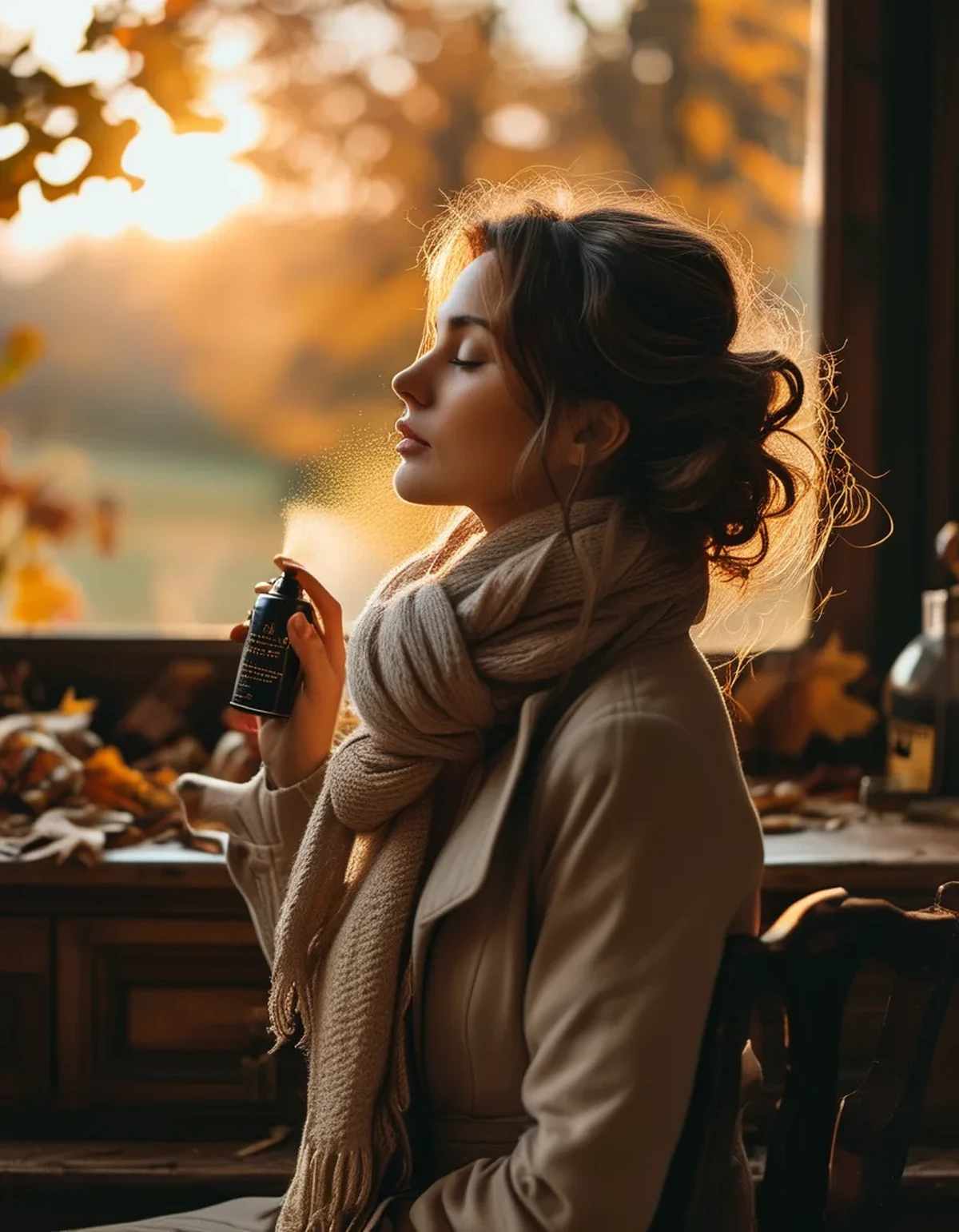
Way 4: The layered placement - unscented base plus fragrance
The single most effective technique for making a fragrance last longer, and it is not about the fragrance.
Dry skin releases fragrance faster and holds it less well. Oils and moisturisers give the fragrance molecules something to bind to, slowing evaporation considerably. This is why the same perfume lasts twice as long on some people as on others - skin type, not perfume quality.
Autumn skin is drier than summer skin. Heated indoor air and lower outdoor humidity strip moisture, which is a large part of why a fragrance that lasted all day in August vanishes by lunch in October.
Apply an unscented moisturiser or a plain oil first, then fragrance on top while the skin is still slightly tacky. Petroleum jelly on a pulse point is the extreme version of this and genuinely extends longevity by hours.
Unscented matters. A scented body lotion competes with the fragrance and often distorts it in ways that are hard to diagnose - many mysterious perfume changes are just lotion.
Best for: light fragrances, eau de toilette concentrations, and anyone who says nothing lasts on their skin. This technique solves that complaint more reliably than switching bottles.
Way 5: The evening rebuild - reapply to a different spot
When a daytime fragrance has faded and you want presence for the evening without starting over.
Do not respray where you sprayed this morning. The dry-down of the original application is still there, and a fresh spray on top of it combines the new top notes with old base notes - which rarely smells like either.
Choose a fresh warm spot instead. Wrists if you started at the neck, or the back of the neck if you started at the chest. The new application reads cleanly.
One spray is usually enough in the evening. Indoor heating raises your skin temperature, and evening air indoors carries scent further than cold outdoor air does. What felt modest outside at 8am will be twice as present at a warm dinner table.
This is also the moment to switch bottles if you own two. A lighter daytime scent and a deeper evening one is the most practical two-fragrance wardrobe there is, and autumn is when the difference between them becomes most useful.
A rebuild takes fifteen seconds and does more for how put-together you feel than almost anything else at that hour.
Best for: long days that turn into evenings, and for anyone who has ever wondered why their fragrance smells strange at 7pm.
FAQ: Autumn Fragrance Questions, Answered
Why does my perfume smell weaker in cold weather?
Cooler air slows evaporation, so fewer scent molecules lift off your skin at any moment. The fragrance is still there and will often last longer - it simply projects less. The fix is warmth and placement, not more sprays.
Should I switch fragrances for autumn?
You do not have to. Warm, woody, spiced, and vanilla-based fragrances perform noticeably better in cool air, while very light citrus scents can disappear - but a fragrance you love with a moisturiser base and better placement works year-round.
How many sprays is too many?
If you can still smell your own fragrance strongly after twenty minutes, it is likely too much for the people around you. Nose blindness sets in fast, so your own perception is not a reliable gauge - two to four sprays covers almost every situation.
TL;DR:
- Cool air slows evaporation - autumn fragrance projects less and lasts longer, so placement beats quantity.
- Collarbone and behind the ear for close wear; chest and inner elbows for projection.
- Hair and scarf last longest - never spray alcohol directly on hair, and spray the inside of a scarf.
- An unscented moisturiser underneath is the single most effective longevity technique.
- Reapply to a fresh spot in the evening, not over the morning’s dry-down.
Try the moisturiser-first trick tomorrow morning. It is free, and it usually adds two or three hours.
Keep Reading
This article is for general informational and styling purposes only. Fit, sizing, and product availability may vary.