Finding Your Signature Scent: A Beginner's Guide to Perfume That Feels Like You
Some women are remembered by a scent — the friend whose hug smells like warm vanilla, the colleague trailing something green and expensive. A signature scent is the most intimate accessory that exists: invisible, memorable, and chemically welded to how people recall you. Finding yours is a genuine skill, mostly untaught, usually attempted in a fluorescent-lit department store under sensory assault. Here is the actual method — families, testing protocol, and the path to the bottle that smells like you.

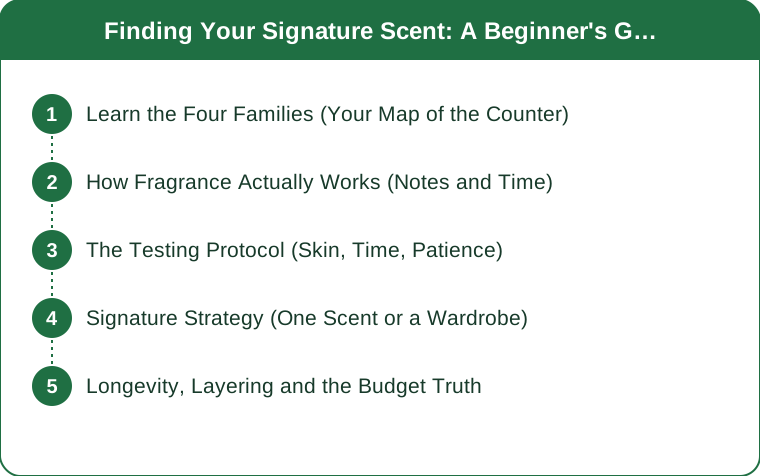
Learn the Four Families (Your Map of the Counter)
All of perfume organizes into four broad families, and knowing your lean cuts the search by 75%: florals (rose, jasmine, peony — from fresh petal to heady bloom; the largest family), orientals/ambers (vanilla, spice, resins — warm, sensual, evening-coded), woods (sandalwood, cedar, vetiver — grounded, elegant, quietly confident), and fresh (citrus, green, aquatic — clean, energetic, summer’s home team). Most women flare toward one or two instantly upon smelling exemplars. The counter stops being chaos the moment you can say show me warm ambers and mean it — this vocabulary is the whole first lesson.
How Fragrance Actually Works (Notes and Time)
The pyramid briefing: perfumes unfold in movements — top notes (the first ten minutes: bright, volatile, the citrus-and-spritz hello that sells bottles and then leaves), heart notes (hours one through three: the florals and spices doing the actual character work), and base notes (the four-plus-hour foundation: woods, musks, vanilla, amber — what your scarf smells like tomorrow). The commercial trap lives in that sequence: buying on the top note is buying a ten-minute stranger. Which is why the entire testing protocol below revolves around one rule — never judge a fragrance before the base arrives.

The Testing Protocol (Skin, Time, Patience)
The method that finds keepers: test a maximum of three per outing (the nose fatigues fast; coffee-bean sniffing is theater — fresh air breaks work better), paper strips for the first cut but skin for any contender (your skin chemistry — pH, warmth, even diet — genuinely alters scent; the same perfume performs differently per woman, which is why her signature smells wrong on you), then the full wear test: one spray, one day, checked at ten minutes, two hours and six — samples and travel sizes exist precisely for this and cost a fraction of a blind-bought regret. The keeper reveals itself by a specific symptom: you keep catching it on yourself and smiling. That is the entire diagnostic.
Signature Strategy (One Scent or a Wardrobe)
Two schools, both valid: the true signature — one scent worn always, maximum memory-welding, the classic move (pick something with moderate projection and year-round versatility; the office and the airplane impose diplomacy — skin scents over sillage bombs) — or the fragrance wardrobe: a small rotation by context (a fresh daytime, a warm evening, a summer citrus — most collectors settle here, with one dominant lead still doing signature duty). Application craft either way: pulse points (warmth diffuses scent — wrists unrubbed, neck, behind ears), fabric for longevity versus skin for evolution, and the restraint rule — the wearer should catch it occasionally; the room should not receive it in advance.
Longevity, Layering and the Budget Truth
Closing craft notes: make scent last by moisturizing first (fragrance clings to hydrated skin and evaporates off dry — unscented lotion under perfume is the oldest trick employed), spraying clothes-adjacent (hair mist formats exist because alcohol dries hair), and storing bottles dark and cool (the dresser-in-sunlight is where perfume goes to turn). Layering basics: one anchor plus one accent (vanilla under nearly anything; citrus over warm bases) — subtlety being the entire art. And the budget honesty: price and quality correlate loosely at best — legendary scents exist under $50 and forgettable ones above $300; samples-first shopping and decant services let you audition the expensive contenders for latte money. The signature is found by nose, not by price tag.
The signature scent search, systematized: learn your family lean, trust only the base notes, wear-test three finalists like auditions, and let the one you keep smiling at win. It is a slower purchase than the department-store ambush intends — and it produces the rare possession that becomes part of how you are remembered. Invisible, daily, unmistakably yours. Worth the protocol.
Keep Reading
This article is for general informational and styling purposes only. Fit, sizing, and product availability may vary.