5 Ways the Same Perfume Reads Differently Across a Single Day
Quick Answer: A perfume is not one smell, it is a sequence. Top notes burn off in 15-30 minutes, the heart holds for two to four hours, and the base can last eight or more. Add your skin temperature, the weather, and what you ate, and the same three sprays genuinely produce five different fragrances across a day.
You sprayed it at 7:45 and loved it. At noon a colleague asked what you were wearing and you had to check. By 9pm it smelled like something you would have bought on purpose but did not.
All of that was one bottle.
Moment 1: The first ninety seconds
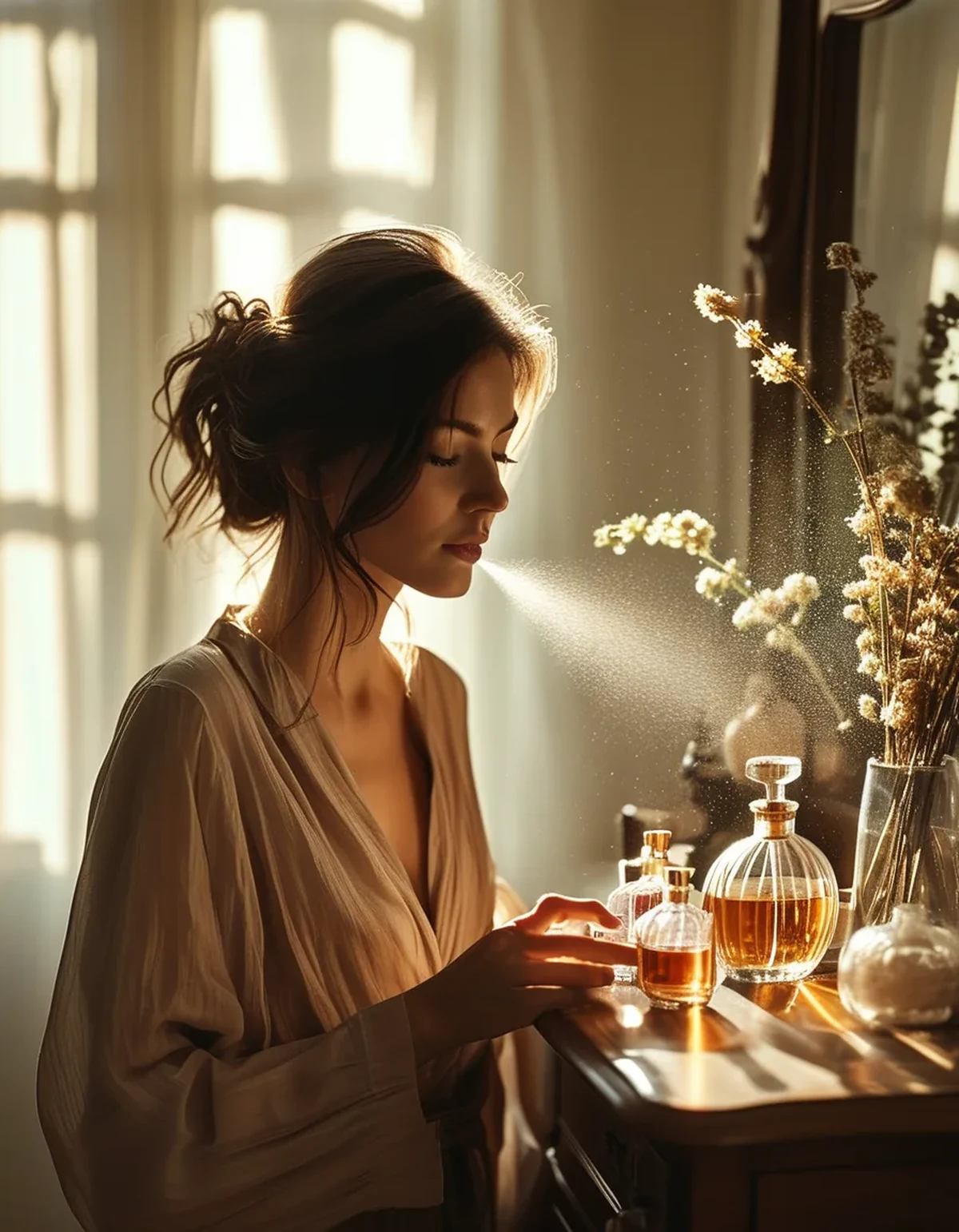
This is the part almost nobody actually experiences properly, because you are usually still holding the bottle.
What you smell in the first minute is dominated by alcohol carrying the most volatile molecules — citrus, aldehydes, sharp green notes. The alcohol itself has a distinct sharp edge that most people read as the perfume being ‘strong’.
It is not the perfume. It is the solvent leaving.
What to do differently: wait a full two minutes before deciding anything about a fragrance. In a store, this is the difference between buying well and buying the alcohol. Spray, walk away, come back.
A note on placement: spraying onto skin gives you this phase faster and hotter than spraying onto clothing, because skin warmth speeds evaporation. Fabric holds the sequence back and stretches it out.
Moment 2: Mid-morning, the opening in full
Roughly ten to thirty minutes in, and this is the version most perfumes are designed to sell.
The alcohol has gone. The top notes are at their clearest — bright, lifted, and usually the reason you liked the fragrance in the first place. Bergamot, lemon, pink pepper, fresh green notes, aldehydic sparkle.
This phase is also the shortest, which is one of the quiet frustrations of wearing fragrance. The part that made you buy it is the part that lasts the least time.
If you want more of this phase, the practical approaches are reapplication (fine, though most people over-apply when they do it), choosing fragrances built around longer-lasting citrus accords, or spraying onto a scarf or hair where evaporation is slower and the opening lingers noticeably longer.
Moment 3: Early afternoon, the heart arrives
Two to four hours in, and you are now wearing the fragrance the perfumer actually built.
The heart is where florals, spices, and the structural character live — rose, jasmine, iris, cardamom, tea. This is the longest genuinely distinctive phase, and it is what other people smell in most of your interactions.
This is also where skin chemistry has the most visible effect. Warmer skin projects the heart more strongly and moves through it faster. Drier skin holds less and reads lighter throughout. The classic experience of a fragrance smelling completely different on a friend is almost always a heart-note difference.
Worth knowing: this is the phase where you stop smelling your own perfume. Olfactory adaptation sets in within about fifteen minutes of consistent exposure, so by early afternoon your fragrance is clearly perceptible to everyone except you. Reapplying because you cannot smell it is the most common way people end up wearing too much.
Moment 4: Late afternoon, warmth changes everything
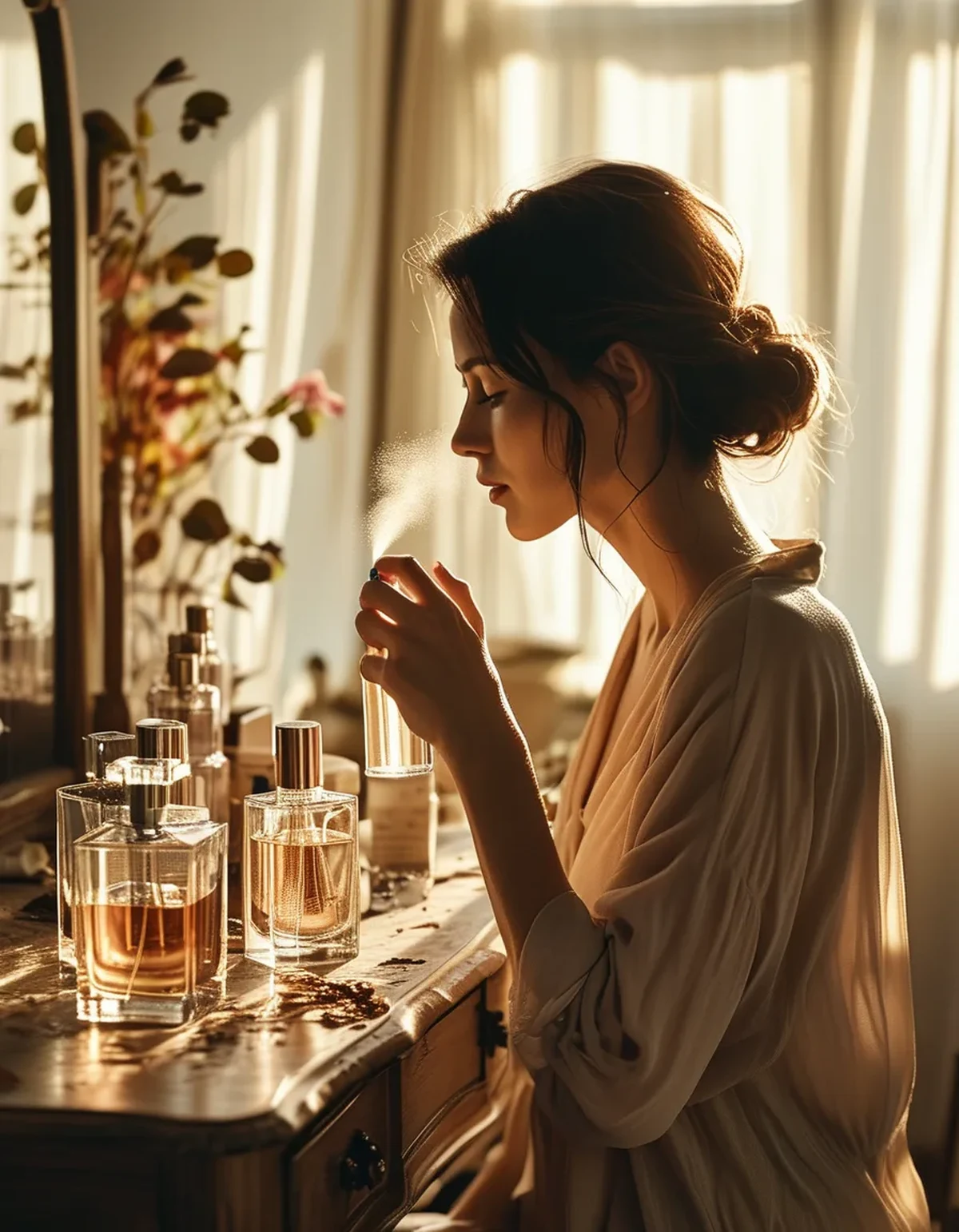
By 4 or 5pm, three things have shifted: the heart is fading, the base is emerging, and your skin has been warmer for hours.
Heat accelerates evaporation, so a hot day compresses the entire sequence. A fragrance that lasts eight hours in October can be down to base notes by 2pm in August. This is the single biggest reason a favourite scent feels wrong in summer — you are not smelling a different fragrance, you are smelling a fast-forwarded one.
The reverse is also true. In cool weather, molecules evaporate more slowly and the same perfume seems quieter and closer to the skin. It has not weakened. It is projecting less because there is less energy moving it off you.
Practical adjustment for late summer into fall: in heat, apply less and to cooler pulse points — the inside of the elbow and behind the knee rather than the neck. As the weather cools, move back up to the neck and collarbone where warmth helps projection.
Moment 5: Evening, the base is all that is left
Six to ten hours in, and what remains is the foundation — musk, amber, woods, vanilla, resins.
The base is quiet, close to the skin, and often the phase people love most without knowing it is a phase. It is what your scarf smells like the next morning. It is what someone notices when they hug you goodbye.
This is also why judging a perfume by its opening is such a poor strategy. You will spend more hours in the base than in any other phase, so it deserves the most attention when you are choosing.
A better in-store method: spray one fragrance on skin, live with it for a full day, and decide in the evening. Testing four at once on a paper strip tells you about four openings and nothing about the thing you will actually be wearing at dinner.
FAQ: How Perfume Develops, Answered
Why does my perfume disappear on me but not on my friend?
Skin type is the main variable. Drier skin has less oil for fragrance molecules to bind to, so scent lifts off faster. Moisturizing with an unscented lotion before applying makes a genuine difference — it gives the fragrance something to hold onto and can add hours.
Should I spray on clothes or skin?
Both, for different reasons. Skin gives you the true development with your own chemistry. Fabric holds the opening and heart notes far longer and projects more. A common approach is one spray on skin and one on a scarf or coat lapel. Test on an inconspicuous spot first — some fragrances stain light or delicate fabrics.
Does storing perfume in the bathroom really ruin it?
Yes, over months. Heat and humidity swings degrade the more delicate molecules first, so the opening flattens while the base survives. A bottle that smells duller than you remember, particularly at the top, has usually been stored somewhere warm. A dark drawer in a cool room is genuinely better.
TL;DR:
- The first ninety seconds are mostly alcohol — wait two minutes before judging anything.
- The opening you fell in love with is the shortest phase; the base is the longest.
- You stop smelling your own fragrance within about fifteen minutes, which is why people over-apply.
- Heat compresses the whole sequence, so summer wear needs less product and cooler pulse points.
- Choose fragrances by how they smell in the evening, not on a paper strip in a store.
The habit that changes how you buy: wear one thing for a full day before deciding. It is slower and less fun than sampling five, and it is the only method that tells you about the eight hours you will actually spend with the bottle you take home.
Keep Reading
This article is for general informational and styling purposes only. Fit, sizing, and product availability may vary.